Friday, July 26, 2013

Prophecy of the Most Beautiful by Diantha Jones (Oracle of Delphi #1)

Chloe Clever has had it rough: her father left her family a few years ago, she’s plagued with hallucinations of the scariest kind and she’s her high school’s resident freak.

By the second chapter we know why: Chloe is the Oracle of Delphi, and the voices she hears and visions she sees are real. She’s saved in the nick of time from certain death at the hands of an evil Ker by the children of... Apollo. Turns out the god of prophecy has some very good reasons to want to protect the Oracle, but Chloe learns very quickly that the gods don’t do anything for free.

The first people to warn her about the gods? Their demigod children, who may have been blessed with some of their immortal parent’s power, but are all varying degrees of dispensable. Even Strafford Law, the most powerful of Apollo’s children, is ultimately just a tool of his father’s. Chloe, however, quickly sees him very differently.

Chloe’s task is to figure out The Prophecy of the Most Beautiful, and even The Knowledge bestowed (or forced?) upon her by Apollo isn’t enough on its own. In fairness, though, having to fight off attacks and encountering people literally falling from the sky is a huge distraction. But even before she does solve it, it’s clear that Olympus has bigger issues simmering, and Apollo, Strafford and Chloe are destined to play a huge part in what’s going down. So, evidently, might her family, but that’s a story for the next book.

As a longtime mythology fangirl, I love that Jones begins to tie up some “unfinished business” the original stories left us dangling with. Not to give anything away, but Roberto Calasso would definitely approve of the way she’s doing it. Also, Jones drops hints several times that Chloe’s previous life may not have been everything she thought it was, but my jaw still dropped when we realized just how different it really was. I cannot wait to see how the twist with her family plays out. Finally, I enjoyed the character Strafford; I’m very curious now to uncover why he needs to redeem himself- and how he’s going to do it.

Recommended for mythology fans.


Tuesday, July 23, 2013

Alpha Males Need Not Apply

When Emily encounters alpha males in The Smartest Girl in the Room, she does a little more than roll her eyes. Having been the uncool kid for most of her life, she's very aware that popular, powerful people can also be bullies; the difference between them and the rest of the world is that they're much less likely to be criticized. Mitch may have a lot of flaws, but one of them isn't wanting to bend Emily to his will.

Emily's good friend Miranda isn't afraid of alphas because she's lived with one all her life. And while she's smitten when The Family You Choose opens, once she discovers the truth about him, let's just say the very sweet character Emily and Mitch first encountered will show how far she's willing to go when pushed. But how far will the man in question go to get her back?

To read more about my feelings on alpha males, please check out the latest stop in the Careful You Don't Outsmart Yourself tour, this time on my friend Michelle Cameron's blog.

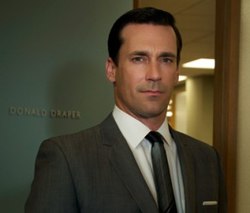
Yes, you're a very pretty thing- but we've all seen how you treat people.

Monday, July 15, 2013

Helping Homeschoolers in the Library by Adrienne Furness

As an urban homeschooler who lives on a small budget with a large family, I utilize free resources as much as I can. Hands down, my all-time favorite resources are public libraries, both the ones in my city (Boston- yes, I am very lucky) and in my surrounding towns and cities. While those collections and facilities are world-class and the librarians have been extremely helpful, I was still looking for ideas on how my children could get even more use out of it.

This book really is perfect for my needs. The first part goes into a fair and comprehensive look at styles of homeschooling, some groups that have homeschooled in large numbers and a bit of the legal history of homeschooling. One of its first recommendations is that homeschooling guides- particularly the work of early homeschool advocate John Holt- be made available for parents as they try to find what will work best for their families.

The second part talks about what the libraries could offer that will make homeschooling families' lives easier. Recognizing that every family will have different needs, it suggests starting by offering a basic session on how homeschoolers can access information that already exists in the library. From there, make the families comfortable enough that they will discuss their existing goals and interests. After that- to the level that's feasible given library funding and possible grants- help build programs that will suit their needs. (In a well-stocked library, many of those programs will be more about "curating" existing materials than buying anything new.)

While most of the programs will be something that most children would want to take advantage of, Furness notes that they have a particular interest in the college admissions process given that many will have to create their own transcripts and diplomas. As necessary and possible, arranging for speakers to come in from nearby colleges would be hugely helpful. (The same can be said for financial aid.)

The book is interspersed with the real-life experiences of several homeschooling families and librarians. It also goes into detail about a handful of successful programs librarians created to serve the population. The most impressive one goes to the Johnsburg Homeschool Resource Center. In addition to detailing the offerings (accelerated reader books, math manipulatives and a miniature science lab among them), it also describes the funding process the library used to facilitate its creation.

This book inspired me to make suggestions to my librarians (and they already know enough about homeschoolers that they are asking for them anyway). I highly recommend it for any homeschooling parent looking to better utilize their library's resources.

Buy from Brookline Booksmith


Thursday, July 11, 2013

Perfection is boring

The "Careful You Don't Outsmart Yourself" blog tour continues on the Free Book Dude. I write today about the importance of writing flaws into your main character. I use The Fountainhead as my example; it works as philosophy (even if I don't agree with it), but it doesn't work as literature. If the main character is already perfect on page one, why do I want to keep reading?

Please read the post here.

"I've got this all figured out. I'll just wait through the rest of the book for the rest of you to figure it out."

Sunday, July 7, 2013

Why do we write what we write?

A few nights ago, as part of my Orson Welles binge, my husband and I watched his version of Jane Eyre. He went into it rolling his eyes at why anyone would find Rochester attractive; I went into trying to explain why Jane would be attracted to someone like him. By the time the movie was over, our positions were reversed: he was so impressed with Welles' performance that he could sympathize with both of them for the first time; I was so horrified by some of the highlighted dialogue that when Jane left Thornfield I couldn't get the door closed fast enough. 

Rochester just might be the prototype for the manipulative alpha-male many modern readers groan about in romance novels.

I had another disturbing thought as I watched Welles (who was magnificent in the role) teasing, belittling and wooing Joan Fontaine's Jane Eyre: he's a lot like a character I had originally written as the romantic lead in The Family You Choose. I shuddered a little bit before I reminded myself that at this point he is most definitely not, but still.

On that note... Loren Kleinman was kind enough to host me on her blog today to talk about some less disturbing influences. I promise- no more alpha males :-)

"Don't look sad yet, Jane; I haven't asked you to compromise your principles for our love yet"

Tuesday, July 2, 2013

Regrets... I've had a few


Today I'm featured on C. J. Brightley's blog, talking about the importance of If Only (or What If) and regret in our work. Whether it's a mad scientist trying literally trying to go back in time, someone going through a midlife crisis trying to recapture his or her youth or someone simply reflecting on how different everything could have been "if only...", those glimpses into an alternate version of the past can be powerful tools to help us make peace with our present- and move us into a better future.

Find the full post here.


Frank Sinatra, My Way (Live at the Royal... by waytoblue

Monday, July 1, 2013

Ending Manic Pixie Dream Girl Syndrome

I found this article by Laurie Penny via Facebook, and I'm blown away. I was nerdy before it was cool so in some ways I could have been a natural fit for Manic Pixie Dream Girl, but I wasn't petite (or white?) and I'm also one of the most opinionated people on the planet; my natural state is arguing, and that's rarely anyone's fantasy anything Dream Girl.

Lucky me, because this does not sound like fun. I wouldn't want to be this person, and I don't want to write about this person either. That's why my young heroines are as far away from this type as possible.

And just to prove the aforementioned nerdiness... yeah, I'm slightly heartbroken about the Doctor Who criticism, but only because she articulates so well what's made me uncomfortable about the most modern companions.

Who do you want to be?