Monday, March 25, 2013

Militarism versus Reform (an excerpt from Moon Thailand)

This is the last of the excerpts from Moon Thailand.  Here we look at Thailand's role in World War II and how they managed to come out, if not ahead, at least well-positioned for the next era.  But the tension between militarism and reform remains an issue for Thailand to this day.

--

Militarism versus Reform

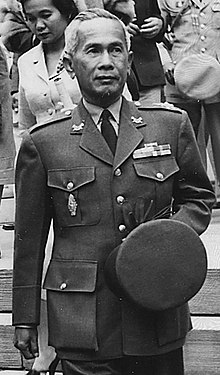
The designated heir was Prince Ananda Mahidol, a nephew of Prajadhipok.  As the young prince was only ten years old and studying abroad, he would not be a factor in Siam’s politics for at least a decade.  The power vacuum this created was filled by both the military and intellectuals, led by Phibun and Pridi, respectively.  Phibun took control, and at this point changed the name of the country to Thailand.

Phibun and his supporters were openly enamored with the strength of the militant nationalism espoused by Italy, Germany and Japan.  Further, the Thai felt a kinship with the Japanese as their two countries were the only ones in Asia that had escaped European colonization during the 19th century.  Despite this, he did not have any desire to enter a war between the Allied and Axis powers and strove to keep a balance between the two interests in Thailand.  However, once France capitulated to Germany in 1941, Phibun took the opportunity to snatch back the parts of French Cambodia that had been lost to them in 1893.  Japan sweetened the deal with Thailand by giving them territory to the north and east of their borders. 

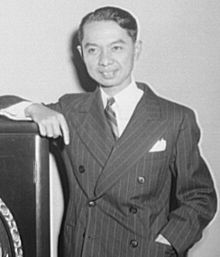
Pridi Banomyong

Thailand’s entrance into World War II on the side of the Japanese was complicated. On one hand, Phibun was hopeful that if Japan could use Thailand as a base they would be able to gain back more “lost” territory.  Indeed, they did regain territory from Burma and Malay in 1943.  On the other hand, resisting the Japanese would have been disastrous.  After Japan’s initial request to use Thailand as a base in December of 1941, Phibun’s aides attempted to delay giving an answer for a day.  However, when Thailand was invaded at nine different points on the same day that the Japanese struck, infamously, at Pearl Harbor, the Thai felt they had no choice but to comply with the Japanese terms. 

Initially, Phibun imagined that Thailand could be a partner with Japan that would throw off the hated European colonialists.  However, it quickly became apparent that the Japanese saw Thailand as an occupied country and not an ally.  They forced the Thai government to make “loans” to them and used their supplies for their war effort. 

Plaek Phibunsongkhram (Phibun)

The war alienated the civil leaders, such as Pridi, from the militaristic followers of Phibun.  Nevertheless, when it was apparent by 1943 that Japan would not be victorious, both factions began to make contacts with the Allies to undermine the Japanese.  They were joined by Seni Pramoj, a member of the royal family who was serving as the ambassador to the United States and had refused to serve the notice of war to the American government.  These efforts came together in the Seri Thai (Free Thai) movement.

Seni Pramoj

By 1944, Pridi’s civilian group took power from Phibun, in part to improve their chances with the Allies after the foreseeable Axis loss.  This maneuver did in fact help the Thai when the British and French, indignant over the manner in which the Thai had taken advantage of their weaknesses during the war, demanded retribution.  The United States, which had never officially been at war with Thailand, instead insisted that it be treated as an enemy-occupied state.  After Pramoj was invited to return to Thailand as Prime Minister, the British were convinced to settle for a compensation of rice and the return to pre-war boundaries.  These negotiations were the beginning of the strong ties between the US and Thailand.

© Suzanne Nam.

--

Want to read more?  Please check out Moon Thailand (Moon Handbooks) by Suzanne Nam


Monday, March 18, 2013

Nascent Nationalism (an excerpt for Moon Thailand)


Nascent Nationalism

Vajiravudh succeeded his father as Rama VI.  He, like many of his brothers, was educated in Europe.  It is not surprising then that his reign is remembered for taking the first steps toward defining the Thai “nation”.  But, as so many other countries experienced during the early 20th century, the elite classes were beginning to embrace not only the idea of nationalism but also democratic and/or republican reforms.  It can be said that the monarchy wanted to have it both ways: continued emphasis on hierarchy with limited reforms to serve the “national” interests.  What Vajiravudh and his successors were to find was that Siam was progressively less willing to accept change in everything but its political institutions.

What was the Sixth Reign’s idea of the nation?  Ideally, it was part of the triumvirate of nation, religion and monarch (chat-satsana-phramahakasat).  The nation could be seen to be composed of similar people who were unified in their desire for the good of the many.  It was something that its members should be willing to defend even with their lives.  Not surprisingly, during this period the issue of ethnicity assumes greater importance, as it did around the world. 

Another worldwide phenomenon that touched the Thai at this time was xenophobia.  If it is a common identity that is the primary unifier of those within the nation, those who are different can be a threat.  Although in fact Thailand was, as we have seen, long home to different ethnic and language groups, the Chinese, by virtue of their numbers and importance in trade and bureaucracy, attracted the most negative attention.  Rama VI himself wrote an infamous pamphlet called “The Jews of the East”.  In it he accused the Chinese of being disloyal, entitled and overly reverential of wealth while clinging to their ethnic identity.  Their relationship to Siam’s economy was compared to “so many vampires who steadily suck dry an unfortunate victim’s life blood.”

This was one of the lower points in Thai history.  However, it’s useful to examine it not only to understand internal Thai relations, but also Siam’s role in the larger world.  As repugnant as it is to modern readers, anti-Semitism was a popular political and social orientation in early 20th-century Europe, particularly among the aristocratic elite.  Further, the British and other European nations saw the Chinese as a commercial threat.  By the 19th century, Europe had made so many breakthroughs in technology and conquest that they perceived themselves to be the ascendant leader into the future and China as the decadent symbol of a failed past.  Many of the Thai nobility and royal family, including the king, would have been educated with these people from a young age, and it follows that many of them adapted this world view to their special circumstances.

Vajiravudh aka Rama VI
If in many ways his father and grandfather were the right monarchs for their time, Vajiravudh may have been the wrong one for his.  His extravagance, homosexuality and Western style made him seem in some ways too foreign to many of the people he governed; ironic, given his promotion of national unity.  He also seemed, at times, more interested in the arts than affairs of the state.  Further, he appointed some of his favorites, many of whom came from the common class, to positions of importance in his cabinet.  This was a break with the precedent his father had established in which his well-educated uncles and brothers would normally have filled the majority of the top posts.  Although many questioned the motivations behind these appointments, these helped to establish an example that was later used in subsequent reigns to allow commoners access to government positions. 

The country was still smarting over the losses of 1893 when World War I broke out.  Many of Vajiravudh’s advisors opposed his decision to declare war on Germany and send a token force to fight for the Allies (which included Great Britain and France) in 1917.  However, this ended up yielding important rewards.  Not only were they able to alter their treaties with Britain and France to their advantage, they also earned a seat at Versailles and became a founding member of the League of Nations.

Those achievements are best appreciated in hindsight.  Post-World War I contemporaries found Vajiravudh increasingly more of a burden than an asset to Thailand.  He was not the first extravagant- or homosexual- ruler.  However, in light of the post-WWI Depression, his continued lavish expenditures did nothing to endear him to a population that was already beginning to question the utility of an absolute monarchy.   

After the war, the demand for rice and silver, two of Bangkok’s primary exports, declined.  The steps taken to address the fall off led to deficits and borrowing.  In addition, some of the promises the royal family had made in the years before the war were beginning to look thin.  Although education was a stated priority, it took only 3% of the budget; 23% went to military spending and more than 10% to royal expenditures under the auspices of the Privy Purse and the Ministry of the Palace.

Political tensions were rising as well as the ideology of nationalism that began to take hold in Southeast Asia.  While the Malay and Lao populations in Bangkok were easily controlled, the larger and more influential Chinese were not.  They were angered over Japanese activities in China and staged anti-Japanese boycotts and protests.  At this time Bangkok also became a focus of Vietnamese, Lao, Cambodian and Burmese nationalist activity against their European colonizers.  The Thai government was sympathetic, but they were leery about alienating the European nations.

Thai students who returned from abroad- particularly France- were increasingly dissatisfied with Bangkok’s progress towards modernization.  Two such student leaders, Pridi Phanomyong and Plaek Phibun Songkhram, were to play important roles later in Thai history.

© Suzanne Nam.

--

Want to read more?  Please check out Moon Thailand (Moon Handbooks) by Suzanne Nam

Friday, March 15, 2013

Galileo's Muse by Mark Peterson

Mark Peterson's thesis: Galileo's scientific and more importantly mathematic genius was inspired not by contemporary Renaissance science but by classical and Renaissance arts.  At first, this seems like a fanciful proposition, but by the end of the book the reader will be convinced.

Although Peterson paints a detailed picture of Galileo's world and influences, several names come up repeatedly.  Perhaps the most important is Pythagoras (although it must be admitted that so little is definitively known about Pythagoras that we are probably giving deference more to the Pythagoreans than the man himself).  By the time Galileo was born, Pythagoras was like a mythic god whose teachings, always consciously mysterious, had been garbled to the point that most of what remained wasn't knowledge but lore.

Incredibly much of that lore wasn't just accepted but untested.  We see this particularly in music theory.  The ratio of two strings that were an octave apart was known to be 2:1 thanks to the Pythagoreans.  This was true, but for almost 2000 years it had been accepted that this meant simply doubling the tension on one of the strings.  Experiments performed by Galileo's father Vincenzo revealed that the tension needed to be increased by four- the square of two.  Similar experiments showed the same results for the accepted ratios for other intervals. Pythagoreans had realized centuries before that the relationship was exponential- geometric, if you will- but somehow that result had been lost and needed to be re-derived.


I thought this was the most fascinating chapter, and not only because I am not an expert in music theory.  The problem with tuning different instruments to each other that arose (in part) as a result of the misunderstood mathematics had been noticed, of course, by anyone who could hear.  However, because mathematics was so intertwined with philosophy, music teachers continued to insist that instruments be tuned by theory, even if the resulting sound was awful.

(As an aside, I note that the math around tuning seems dependent on a seven major note arrangement- CDEFGAB, for example.  I'd love to see how cultures that used a different system managed.)

Another name that comes up frequently: Dante, as in the author of The Divine Comedy.  Two short chapters will convince even the most skeptical that the poet not only knew classical mathematics but understood it well enough to be moved by it.  Peterson gives a close to literal translation of some of the last lines of the Paradiso that, on its face, seem fairly unintelligible ("I wanted to see how the human image/conforms itself to the circle, and finds its place there").  However, after Peterson explains some of Archimedes' (another important influence) work, the reader not only believes but understands that what Dante is talking about is the measurement of the circle.  Peterson's interpretation of Dante's description of Heaven and the physical and spiritual worlds is no less impressive; it is entirely possible that Dante anticipates the field of topology when he describes what we now call the hypersphere to describe the space of the philosophized universe.

Dante's universe, or the Hypersphere

It is easier, perhaps, to "see" the math in painting than poetry, and here we come to another important figure: Euclid.  His work on optics is an explicit influence on the perspective technique used by many painters.  While painting may seem (at first) to be a strange place to apply mathematics, Peterson talks about a number of painters fascinated with the subject, Piero della Francesca being among the most important but not, oddly, Leonardo da Vinci.

If painting is an unexpected place to find math, it is more surprising to find how much mathematics wasn't used in architecture (and engineering).  Brunelleschi's Santa Maria del Fiore in Florence, built a century before Galileo, is an example of a structure that pushes the physical limits of area versus weight.  This issue was instrumental in helping Galileo make a name for himself at the beginning of his career, then later threatened to undue him.  His jumping off point wasn't Santa Maria del Fiore but, rather, the dimensions of Dante's Hell.  (Although he took great pains to stress that this issue was theoretical and not physical, it is still a little horrifying to the modern mind that the subject was taken so seriously.)  He asserts as a young man in the Inferno Lectures that the roof of Hell, which is shaped like a dome, must be a certain dimension and is scalable.  It is only a few years later that he realizes scale has its limits; while the area will only be squared, the volume of the space will be cubed, or increased by another factor.  This probably contributed to the collapse of the cathedral at Beauvais.  According to Peterson, Galileo probably spent many years terrified that someone else would realize this too and spent a significant amount of time preparing his response.  (Surprisingly, the challenge never came.)

Santa Maria del Fiore

Peterson does more than just make his case for why a learned young man of the arts would see the beauty of  math and science more than someone trained in the science of the time.  (And it should be noted that while Galileo apparently spared little respect for Kepler and, shockingly, Copernicus, there were of course other scientists at the time who were also making amazing leaps in scientific understanding.)  He also helps the reader understand the intellectual history of the Western world and explain how mathematics and to some extent science came to be understood more as philosophical examinations of perfection and the role Galileo played in reviving them as concrete methods that could be used as tools.  Even something as basic as measurement was understood differently before Galileo's famous experiments.

It must be said that while much of the historical background is exciting, at a certain point the rigidity imposed by authorities- and not simply those of the Church- becomes stifling.  By the time Peterson starts mentioning the Arabs and Indians, they feel like a breath of fresh air.

Excellent book- recommended for the math and science enthusiast, as well as those who already the see the poetry contained in both.


"... the beauty of physics, the wonder of mathematics..."

Wednesday, March 13, 2013

What Happened to Taksin? (an excerpt from Moon Thailand)


Every country has its own mysteries.  One of the questions that still lingers for Thailand is what happened to the man who ruled right before the current ruling dynasty, Taksin (1734-1782).


--

Taksin, a Sino-Siamese governor from Western Siam who rose to power through the military ranks, defended Ayutthaya against the Burmese but when it was evident that Ayutthaya was going to fall, he gathered his followers and established a base near the Cambodian border.  After the Burmese troops retreated, he retook the Thai plain.  In addition to setting up an orderly government, he also distributed food to the starving, devastated population.  He led an attack against the Burmese and defeated them in battle.  While the Burmese may have been able to successfully fend off Taksin’s forces eventually, Burma was subsequently invaded by China.  Taksin and his followers exploited that distraction and decisively defeated the Burmese.  Later, he and his generals expanded the territory of the kingdom into what is now Cambodia and Laos.

Because of the devastation Ayutthaya suffered, it was no longer suitable as the seat of the kingdom.  Taksin made the decision that it would be easier to build a new city at Thonburi than to rebuild Ayutthaya.  

Taksin


What Happened to Taksin?

Taksin was revered for his salvation of the Thai people, but he is not the ancestor of the subsequent (and current) ruling dynasty.  His fall from power, and the rise of his general, Buddha Yodfa Chulalok, also known as Chao Phraya Chakri, is a subject of controversy.  The simplest explanation may be, as one writer put it, that military success often leads to political strife. 

Although Taksin was sponsored at the Ayutthaya court at a young age and grew to achieve a military rank and a post as governor, he was not from the royal line or any of the aristocratic houses that sometimes supplied successors to the throne.  We can only speculate, but it is probably fair to say that under normal circumstances he would not have become the ruler of Ayutthaya.  These, however, were not normal times. 
Within 15 years of his ascension to the throne, Taksin is said to have demanded to be worshiped as a Buddha and to have meted out cruel and arbitrary punishments (including executions) for what we might today consider minor offenses.  He was perhaps suffering from a prolonged mental breakdown, or he might have grown megalomaniacal. 

A few historians have suggested that Taksin’s breakdown may have been caused by his awareness that he was an outsider and that the conservative factions of his court distrusted him, particularly because his father was Chinese.  There are almost always traditionalists in any court or government, but this explanation is more appropriate for the nation-building 19th century and the nationalist early 20th century.  Further, many wealthy Chinese had married into well-connected Thai families during this period, including that of Chao Phraya Chakri's.

According to most accounts, Chao Phraya Chakri was in the middle of a campaign in Cambodia when relations in Thonburi broke down and Taksin was overthrown.  He returned to Thonburi, put the coup down, and then took power himself, eventually naming himself King.  By all accounts, he ordered the execution of Taksin in 1782.  According to some, Taksin was beheaded, according to others he was put in a velvet sack and beaten to death.  Yet another version states that a double was beaten to death in his place and that Taksin was spirited away to the mountains, where he lived until 1825.

If we are not certain about Taksin’s fate, what can we say about Chao Phraya Chakri's motivations?  Many popular histories have posited that he made himself King because it was his duty to the Thai people.  There are two legends that suggest that he was fated to be King.  The most popular is that the King of Burma himself declared that to him during a personal meeting on the battlefield.  Another states that as children, both Taksin and Chao Phraya Chakri were told that they would grow up to be kings. 

Chao Phraya Chakri could not have taken the throne without the support of powerful interests at the court and in the military, so it is fair to say that he was “made” king, after a fashion.  Also, he was perhaps one of a handful of men who held positions of power and influence in both the military and government that would make him appropriate for the throne.

Despite these dynamics, it would be naive to assert that he was acting without any personal ambition.  This insight shouldn't detract from the achievements of either his reign or his dynasty’s, but should highlight that they were the work of people, not fate.

© Suzanne Nam.

--

Want to read more?  Please check out Moon Thailand (Moon Handbooks) by Suzanne Nam

Tuesday, March 12, 2013

Passion with a Purpose by Erin Cawood: thoughts on violence in literature

Last summer, Erin Cawood and I started talking about violence in our fiction, and particularly domestic violence in women's fiction, chick lit or even romance.  We both write about violence, to varying degrees, in our work, and we both grappled with what our responsibility is as writers when we touch it.

Honestly, I can't tell you why it came up.  It may have started with Fifty Shades of Grey, but then there was a mass shooting in Colorado, a local politician arrested for allegedly assaulting his girlfriend, another shooting in Connecticut, a horrific gang rape in India and the hundreds- thousands, millions- of things that have happened before, between and after.  It almost makes you wonder how you can get away with not touching it in some way.

I'll let Erin take over now...

--

Power struggles and control are becoming more and more prominent in fiction. You just have to look at bestsellers of the twenty-first century such as Harry Potter and Twilight to see the common theme. But what happens when relationship power struggles start upping the ante?

Yes, Mr Not-So-Perfect-Grey from the Fifty Shades Trilogy was all hot and steamy, but he was crazily controlling and turned on by the idea of physical punishment. And the theme of sexual violence against women in Stieg Larsson’s The Millennium Trilogy was inspired by his hatred of violence against women after he witnessed a gang rape at fifteen. So is it okay to say ‘don’t worry its only fiction’?

Well, actually... no, it isn't.

Erin Cawood
It is continually drummed into us that we learn from our media influences and like many teenage girls I discovered love and romance in the pages of a novel. Of course I’m not saying that one character will be responsible for bringing down girl power. But when it comes to issues like sexual control and violence against women in fiction as a writer you have to maintain reality, especially in romance.

I write contemporary romance / women’s fiction / romantic-comedies. I hate the term ‘Chick-lit’ but yeah, there’s a bit of the bubbly, hearts and flowers, boy meets girl malarkey going on here. My genre is stereotyped as fluffy and frequently dismissed as idealistic and only for entertainment. But my characters are real women. When you join my character’s world, they already have a life. Like any new friend, they’ll tell you all about how they got to be the person they are as you travel towards their new destiny. When you part you won’t necessarily get a happy ever after because I’m afraid... we all don’t live happily ever after.

I’m currently working on a darker series where one of the key themes is domestic violence. (Deb's note: The first book is already out.)  Spousal abuse doesn't just affect the married couple, however their marriage pans out. It affects their children, their siblings, their parents, their friends, their colleagues ... It has a ripple effect throughout the people within their lives.  There’s a lot more behind just one person’s lashing out and the other’s reluctance to leave when they’re at risk.

The most important thing we must remember is domestic violence and violence against women is not a class, race, religious, cultural, or geographical issue. It happens every minute of every day in every city in every country in every part of the world. So if we’re going to write about real issues, let’s keep the reality of them in view. Let’s not write something spectacularly entertaining and then dismiss the important issues it raises. If Romance novels can teach us unrealistic expectations of how love is supposed to be then why shouldn't they also teach us how relationships are NOT supposed to be?

Erin Cawood recently published Tainted Love, the first book in her series, Valentina Secrets.  


Thursday, March 7, 2013

A word or two about my published work in Moon Thailand

My sister hired me to write the history section of her travel book.

There, I said it.  Now, without any shame, I can share some of it.

... Well, maybe not shame, but maybe an explanation (defense?).  I'm very sensitive to the words "nepotism" and "merit", which many would consider competing concepts.  Of course, many others have benefited from nepotism before without any guilt, but I just wouldn't be interesting if I were blithe about it, now would I?

The hypothetical charge against me: I wouldn't have gotten this job if the author hadn't been my sister.  To which I can only say: you're right.  Honestly, even now, I wouldn't know where to find similar work, and I'd love to.  

In my defense: I note that my sister hired me for the revision; she genuinely felt that I could improve on material that she'd previously published.  Also, my sister is VERY discriminating and wouldn't give me a pass on anything I'd written if she weren't confident I would do a good job- especially if her name was attached to it.

So, yes, nepotism.  But in this case I am comfortable that it was not "you couldn't get a job without a relative or a friend" but rather "the people closest to you are confident you can write for them."

And I can.


I was excited to research and write about the history of Thailand.  It was only the second time in my life that I was able to put my History Bachelor's to work, and I'm all for feeling like I didn't waste my degree.

I read two types of books for my research: history and other travel guides.  When I was done, I decided I wanted my final product to be somewhere in-between: not as erudite as the histories, but perhaps a little more substantial than what you might expect from a guidebook.  When my sister remarked that she actually learned something after she reviewed my submission, I felt like I'd succeeded.

Hopefully you will too.

Wednesday, January 16, 2013

An Interview with Erin Cawood, author of Tainted Love


Erin Cawood's book Tainted Love was the best fiction I read in 2012.  As I mentioned in my review, she did an excellent job of showing how an intelligent and independent woman found herself in an abusive relationship and how she later found the resolve to leave.

Cawood and I chatted last month about this story and what we can expect from her- and her characters- in the near future.


What made you decide to write about domestic violence?

Faith did.

I wish I could tell you I made a conscious decision and I planned and penned Tainted Love because I wanted readers to understand how easy it is to fall into a relationship such as the one Faith has with Calvin. But to be honest I was skirting around the real issue writing the re-titled second in the series Behind Closed Doors. I didn't have the courage to go in that deep dark forest myself. Then one night, in fact it was 12:30am May 29th 2012, I'd climbed out of bed and gone into the office to distract myself from a panic attack by writing. I was writing a scene where Faith's brother, Darryl is remembering what Faith wrote in her journal - the first letter he receives from her - when the following words just flowed

Big hands grabbed at my wrist, forced me to turn and tumble back to the floor below. I landed on my knees. He hit and he punched and he kicked and he stomped. He didn't stop.
He screamed, "Is this how you repay me?"
What for? What had I done? Blow after blow, he kept repeating it until I was a ball of trembling skin and bones at his feet, long past the point where I felt nothing. He didn't stop.
I prayed for death. I prayed that God would help me. I asked Him to rescue me and when He brought the darkness to gather me, I knew never I'd wake up again.
I dropped everything I was doing and two weeks later I'd written Tainted Love.

Faith's relationship with her abuser begins in the late seventies.  How might her story play out differently if she were thirty years younger?

I don't think Faith's story would have played out much differently. Abuse is about control, possession.  As much as Faith believed Cal married her because she was pregnant, and in some parts this was a sign of the era they lived in, he'd still do it the modern society of today. He doesn't want anyone else to have her. He made that clear on the beach when she first walked away. Besides, Cal has been married before and without giving too much away about the future story lines,Georgia has some tough lessons to learn about kind of man her Dad really is.

One of the most appalling things in Faith's story is how much she suffers while pregnant.  What made you go there?

Through all the research I carried out a common denominator was that abuse is worse during pregnancy and it often starts during pregnancy. You see Calvin through Faith's eyes, and therefore you see his fear of losing her is at its greatest during pregnancy. He can't cope. She willingly believes him to justify the way he treats her, even during pregnancy. 

In your research, what was the most disturbing thing you read?  Did that influence what you wrote?

You know, I live quite a sheltered life and my research only really dipped a toe in the pool of whats really out there. I read about sexual abuse such as being forced to perform sex acts on live webcams. If its not bad enough for the victim already the perpetrator makes it public?  That makes me shudder.  I also read about physical abuse, in one case with a leather straps in front of children, or to children, and while holding babies - and I think that influenced Faith's desire to protect her children from Cal's darker side. The only time she ever stands up to him is to defend her children. 

It's what came after I wrote Faith's story that has affected me the most. The number of readers who have reached out to me through Faith's story... I've learned the hard way that the 1 in 4 women affected by domestic abuse is not a statistic. It's a startling reality and this is why I am donating 50% of the royalties from book sales to various domestic abuse charities is the UK and Abroad.


At some point, Faith seems to lose her regard for her own dignity, but she tries very hard to protect her children.  Is that possible?  

Faith believes this shift in her marriage is temporary. That she just needs to ride it out.  After all, Calvin came back around after all the other children were born. She also believes that it is her fault and she's brought this on herself, therefore she must protect her children from her mistakes. They are innocent in it all. Faith does get what she wants and Calvin comes back to her.

Do we get to see more of the characters you introduced, particularly Faith's children?

Yes, Tainted Love is just the pebble in a lake and Valentina Secrets is the ripple effects of Faith's Story on the lives she touches. Book two in the series, Behind Closed Doors is scheduled to be released at the late March/early April and it follows Faith's younger brother, Darryl. It's set seven years on from the end of Tainted Love, and Faith's children are all grown up, the youngest are now turning sixteen. There are ten books in the series in total one for each of Faith's children and some for Valentina sisters whom you have yet to meet.

When you say "ripples", it makes me think about the after-effects of domestic abuse.  As a writer of fiction, that's some rich territory, but that must be very hard to delve into.  What were some of the after-effects you found for the children of abuse survivors and, without giving too much away, what might we expect to see for Faith's children?

That's exactly what I mean. So without giving too much away... In Behind Closed Doors, Darryl has set up a charity for victims of domestic violence, triggered by the events that happened between Faith and Calvin. Now those ripple effects have just spread a whole lot wider. In this one book alone there is Darryl's relationship with Julia, add an extension to her family, and extend it again to Julia's best friend Krystal Valentina (who has an integral part in the entire series) and once more to Krystal's family.

To watch how this net filters across each life is very rich territory but you're absolutely right. It's a very dark place to go. Once you've opened yourself up to seeing this world you can't close your eyes again and it's difficult to step back from. I found myself unable to write for nearly two months because of the world I'd voluntarily walked into.

There is a lot of conflicting advice on the subject of after effects. I've read in a Canadian research paper that in 40% of homes where the wife is being abused the children are also being abused. Another startling statistic it stated was that 39% of children see their mother being abused, but when broadened to hearing or seeing the after effects of their mother's abuse this jumps up to 60-80%. This is a way of life for them. They will carry the things they see and hear with them into adult life. 

Many who have come from abusive homes end up in abusive relationships themselves. Although the research into the after effects is still new, I don't think this link is as black and white as some people would like us to believe. Abusive relationships are complex. Even the most strong-willed and intelligent people can be misguided by the cocktail of their sense of love, trust, loyalty, faith, the abuse, and the abuser's promises to change. 

So without giving too much away, I'm exploring the effects of what happens when a abused wife eventually snaps, Calvin's first marriage and the unanswered question of what really happened to his first wife. I'll be looking at Caleb's desire to protect his siblings from their father and Georgia's desire to protect her father from Caleb. I'll be taking a deeper look into Calvin's indifference to Caitlyn and Zoe. And you'll learn all about what Lisa's been up to as soon as you open Behind Closed Doors so I won't spoil that for you, LOL! But over the next nine books you can expect unexpected grandparents, tears, tantrums, sibling rivalry, taking sides, declarations of war, and one or two visits from the grim reaper.  Not all of my main characters are safe.

In my opinion, Calvin was monstrous, and watching him become that way was sickening.  But did Calvin have his reasons?  He grew up- or so he claimed- in an abusive household himself.

You'll have to wait and see. I explore the motivations of his character and those of others with abusive tendencies throughout the series. 

What did Faith need to get her away from her abuser earlier?  What can we do in real life to help domestic abuse victims?

That's a tough one because Faith needed to understand that she wasn't the one at fault. In a case like Faith's, where the progression of abuse is slow and the marriage disintegrates over many years, its difficult to say exactly what or when Faith could have been helped. Uncle Robert tried. He tried for years, even risked his own marriage, until Calvin found a way to get him out of their lives. Faith could live with Calvin's flaws as a husband because she believed she made him that way and he was a great father. The moment he failed as a father, the moment she realized how far he'd go in the end and that she was failing to protect her children from the man he really is, she ran. But that didn't stop Cal from pursuing her. 

In real life, victims of domestic abuse need support. The control and manipulation exerted by an abuser is so great that it takes a lot for a victim to speak out. Some never do. So listen, be a confidante. They need someone so they can trust. Do research and let them use your internet to gather information for their own safely. Although it is the obvious and safest route, the last thing they need you to do is to tell them to leave. I hope through Tainted Love I've shown its not as simple as walking out the door. If they are ready to leave, they need you to help them make plans. Getting out safely, having somewhere to go, money, food, a way of getting there, clothes, etc. are all paramount to a successful escape plan.   

Do your research, there are many charities and helplines available online to help.